Saturday, February 15, 2014

143 redux

That our attempt to release 143 ocean tracers had completely failed was finally confirmed by the arrival of three men and a massive truck.


After the deft execution of some extreme parallel parking they unloaded all the boxes, over the next hour and a half. We couldn't even offer them a cup of tea as the cups were, at that stage, buried in the curiously labelled boxes, tea is something that one is not allowed to ship from Japan to the UK, and our kettle only runs on 110Volts. As for the curiously labelled boxes, they provided some on the job entertainment for the three men, who, by the end were skeptical about what may actually be inside our boxes. Does anyone know what a "glay cabinet" is or even a "water tunk"? I suppose we will find out in due course. Over the next few hours we created a box city. It is modelled on Tokyo, which also has numerous little districts devoted to peculiar hobbies.
So far we have found no damage apart from one flat bicycle tyre. Fork oil leaked out of one of our tandems, probably as a result of being stored vertically. But it was so well packed that no oil escaped the tandem's packaging. Other than that, things seem in a rather fresher condition than when they left Japan. My impression is that things got freeze dried. Rather than buy mould insurance we invested in some dehumidifying columns in our container. It could be that they worked - as the ship headed towards the equator the stuff could have heated up and the moisture evaporated and been absorbed by the columns, so that it did not recondense when the ship headed polewards. 

Unpacking is like a very disappointing Christmas as everything is wrapped in lots of tissue paper so that it is not recognisable. The packers packed everything with the same care, which is probably a good policy, as it isn't for a packer to judge the sentimental value of people's rubbish. Thus my best camera lens was as well packed as the pair of used ear plugs that had been left on the sideboard.

Sunday, February 02, 2014

[jules' pics] Wot no camelia?

Culture shock continues unabated. "Normally" at this time of year the grass is brown and the hedgerows full of common-or-garden pink camelia. Instead zillions of white snowdrops are poking through the luminous green grass. The snowdrop previously featured in this blog in November(!) 2009, when we found a small patch of them in Jomyoji English garden. I wonder in which months the camellia will flower here in ole blighty.
snowdrops-1
We also "normally" have about 6 weeks of almost no rain at this time of year. I'm not sure, but this year so far there may have been about one day when it did not rain. That isn't to say it rains all the time, and indeed the rain is much lighter than Japanese rain. For example, we've done quite a lot of running and cycling have only got properly wet while running once and not at all while cycling.

--
Posted By Blogger to jules' pics at 2/02/2014 12:10:00 PM

Thursday, January 30, 2014

[BlueSkiesResearch.org.uk] B4RN


BlueSkiesResearch.org.uk


Posted: 29 Jan 2014 11:02 AM PST
Out in the middle of nowhere..
B4RN-2
There are trenches in the fields with funny cables sticking out of them…
B4RN-1
The reason? B4RN!
B4RN-3
I wonder if it will be fast enough to download CMIP?! Before everyone gets too excited, in Japan we had the world’s fastest interwebulas, but access to a lot of sites was often a bit slow, particularly those in Europe, and downloading CMIP something of a nightmare. Nowadays of course it is Japanese sites that are comparatively slow compared to European ones. So, once they have sorted out outer-Lancashire, B4RN could perhaps go sub-marine and fix up the big inter-tube under the Pacific. Despite these caveats, if we can find a suitable B4RNed property (barn or otherwise) it can only be an advantage for doing BlueSkiesResearch-ing.

Monday, January 27, 2014

[jules' pics] Learnin'

When I were a lass, Lancaster University was a small dignified establishment which endured a lot of wind and rain. These days it looks  more like a district of Yokohama with glistening modern architecture and blocks of student accommodation scattered among the original buildings. And they've got really serious about learning. So serious that there are now specialised zoned rectangles set aside for this particular activity:
Lancaster University
The language spoken at the university also seems to have changed in the last few years. I'm not sure what it is, and I don't understand it very well. Some weird kind of business speak, perhaps. Presently it is all about Quality, and they are going to employ a Quality Assurance boffin instead of some of the usual boffins. As someone who has read Zen and the Art of Motorcycle Maintenance, I find this quite disturbing; that way lies madness.


--
Posted By Blogger to jules' pics at 1/27/2014 04:39:00 PM

Saturday, January 18, 2014

[jules' pics] Swapping grey for green

sheep-1


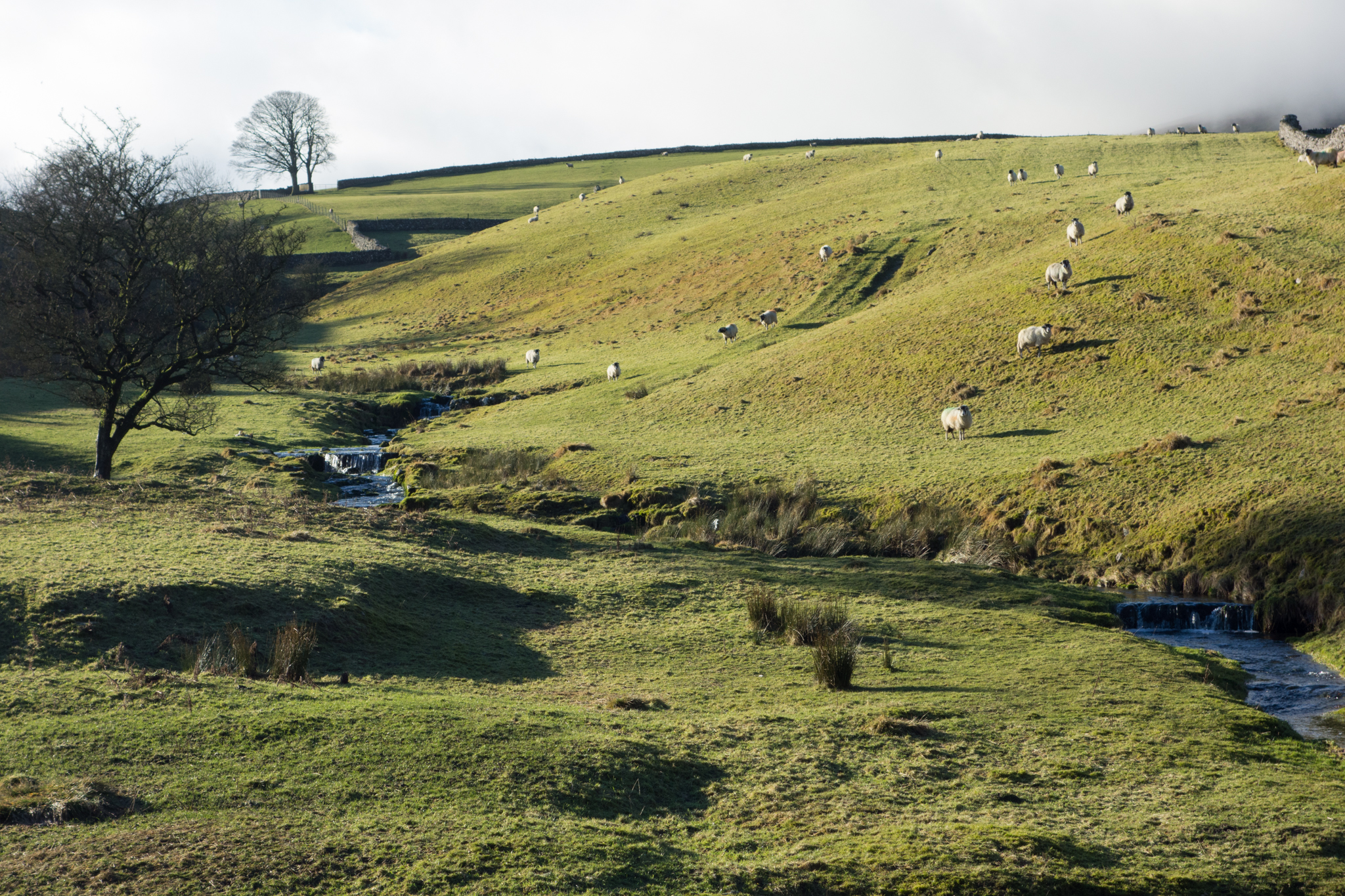
No regrets yet on swapping the grey walls of my cubicle in Yokohama for the green fields of NW England. Our main occupation is now viewing in the real world all those properties we researched online from Japan. Once we viewed one, we had to look at others for comparison, and thus it has snow-balled into having to view ALL of the ones on the rather long shortlist. Huge range of stuff for sale, so it is a matter of working out which works best for us: great views but bitter winds; no views but sheltered; mountain biking but no shopping; new house but tiny rooms; old house but inefficient; lots of everything but too big and expensive... etc.


Meanwhile, in blueskiesresearch, we have gained unlimited internet access (wooo!), but are still sharing a laptop until our stuff arrives from Japan  in mid-February. This is enough to keep a few things like coding and paper revisions ticking over, which will hopefully be sufficient for another month. Amazingly, James earned a small about of money this week, copy-editing a paper for a colleague from JAMSTEC. Even more surprisingly, he seemed to enjoy doing it! Yesterday we went to an excellent  seminar at LEC, Lancaster University, and met up with a couple of people we know there.


Post originally appeared on Jan 16th as "Swapping grey for green" at http://www.blueskiesresearch.org.uk

--
Posted By Blogger to jules' pics at 1/18/2014 09:59:00 AM

Friday, January 17, 2014

Recognising a pattern

The pattern goes something like this: climate sceptic can't publish their nonsense in any real journal under normal peer review condition. CS attains editorship of journal. CS invites his pals to submit their nonsense, they all "review" each other's papers, and recommend them for publication. CS claims that new peer-reviewed research casts doubt on climate change, or words to that effect. Journal reputation goes down the pan. Exhibit A, Climate Research. Exhibit B, Energy and Environment.
Let's now examine Exhibit C: "Pattern recognition in Physics, an open-access journal". Editor Niels-Axel Mörner, check. Authors and reviewers Scafetta, Tattersall, Jelbring, etc, check. "Pattern recognition in Physics, an ex-journal", check.

Kudos to Copernicus for the rapid and decisive way in which they dealt with this problem. The problems at the journal were was first brought to my attention by ThingsBreak just last night, I emailed various people to express my concerns and the journal (which was already under close scrutiny by the publisher) was closed down within 24h. Compare and contrast with the Climate Research farce.

Thursday, January 09, 2014

[jules' pics] Side of Whern

A query was raised as to whether this was Whernside. But it was neighbouring Ingleborough. Hard to say where the top of Whernside is, and it might be just out of the frame in the photo below, so perhaps it is safest to say that the snowy bit is the side of Whernside. The bridgey thing below Whern's snowy side, is the famous Ribblehead viaduct...


I find viaducts quite creepy. Here are some more.
Ingleton 3
Ingleton 1


--
Posted By Blogger to jules' pics at 1/09/2014 07:16:00 PM

Monday, January 06, 2014

More sensitivity?

Myles Allen and Dave Frame would presumably be turning in their graves (were they dead), having decided some time ago that climate sensitivity was no longer interesting. However, others seem to disagree. Sherwood et al have a new paper in Nature arguing that sensitivity must be high, because only the most sensitive models have sufficient tropospheric mixing in a specific region that the authors focus on. Thanks to the several people who sent me a copy BTW.


It looks like a careful bit of work, there's no obvious problem with it, though there is one weakness that the authors are careful to mention, which is that the models may be significantly biased in some way such that an observationally-derived constraint ends in the wrong place. Eg if the models have too much mixing in some other region, or even a bias in some other process or place that compensates, then the Sherwood et al estimate will be biased. A similar issue crops up in the paleo world: if all the simulations of the Last Glacial Maximum use too little negative forcing (which we believe to be the case), then models with the correct intrinsic sensitivity will not be cold enough and a constraint based on LGM temperature change and model simulations will in that case tend to overestimate the true sensitivity.


There's not a whole lot you can do about this problem other than be aware of it, and try to use constraints that are as large scale and relevant to the predictand as possible, to reduce the risk of spurious correlations. That's one reason why I generally prefer the paleo and transient temperature change methods, as despite their own limitations they do at least directly consider the climate response to forcing on large scales. In contrast, emergent constraints generated across the GCM ensemble of climatologies might be spurious (though the ensemble size of Sherwood et al makes this seem a bit unlikely to me) or biased due to other compensating errors. Relatedly, I think I heard a rumour that the previous Fasullo and Trenberth result based on southern ocean biases in CMIP3 disappears in the CMIP5 ensemble. I might have misunderstood this, so don't quote me on it.

Blue Skies Research official inauguration

Today is the first day of Blue Skies Research!!! It is, of course, cloudy, dark, windy and, periodically, pelting with rain. This makes it a great day to start work on revising the paper, and catching up on some other jobs. And, even though we have been in the country less than a month, we have already found some skies of the distinctly blue variety!
20140106-143245.jpg

Saturday, January 04, 2014

[jules' pics] Happy New Year

Turkey for Christmas and grouse for New Year, so the ducks remain plentiful on the ponds of Ayr.

--
Posted By Blogger to jules' pics at 1/04/2014 07:14:00 PM